
Ancient Ban Flower forest in Nam Cum Village, Na Tau commune attracts visitors
In March, when the spring breeze still carries a lingering chill across the hillsides, Nam Cum Village in Na Tau Commune brightens with the pure white blossoms of ban flowers.
The pristine white ban flowers bloom across Nam Cum Village, Na Tau Commune.
According to local residents, the ban forest has existed in Nam Cum since the village was first established in the 1990s. Over the years of settlement and development, the ancient ban trees have become a familiar part of daily life and routines of the local people.
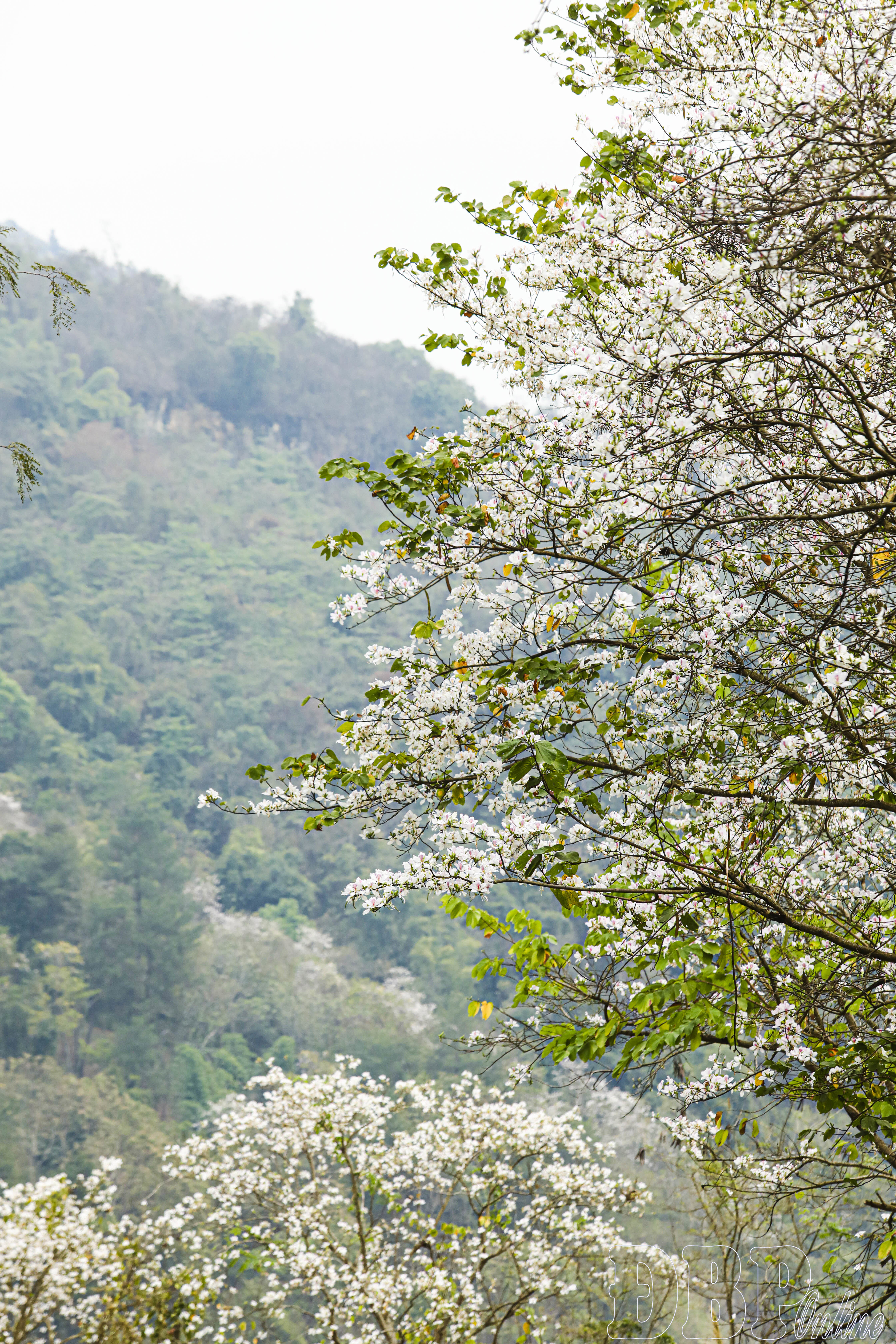
Ban flowers bloom in early March in Nam Cum Village.
Ancient ban trees grow among rice fields, vegetable gardens and along village paths, covering the hillsides and mountains surrounding the village with white blossoms. Each pure white branch stretches above the houses of the Mong ethnic people. Under the shade of the ban flowers, adults rest after working on upland fields, while children gather and play around warm fires in early spring. It is also where stories of daily life and customs are gradually passed down from generation to generation among the Mong people.

Ban flowers bloom throughout the village. Beneath the blossoms is the peaceful rhythm of life in Nam Cum.
The ban flower season in Nam Cum usually begins in March, when the trees shed most of their leaves, leaving clusters of white flowers blooming across the village. When spring winds blow through, delicate white petals drift gently in the breeze, creating a pristine and poetic landscape typical of highland villages in the Northwest.
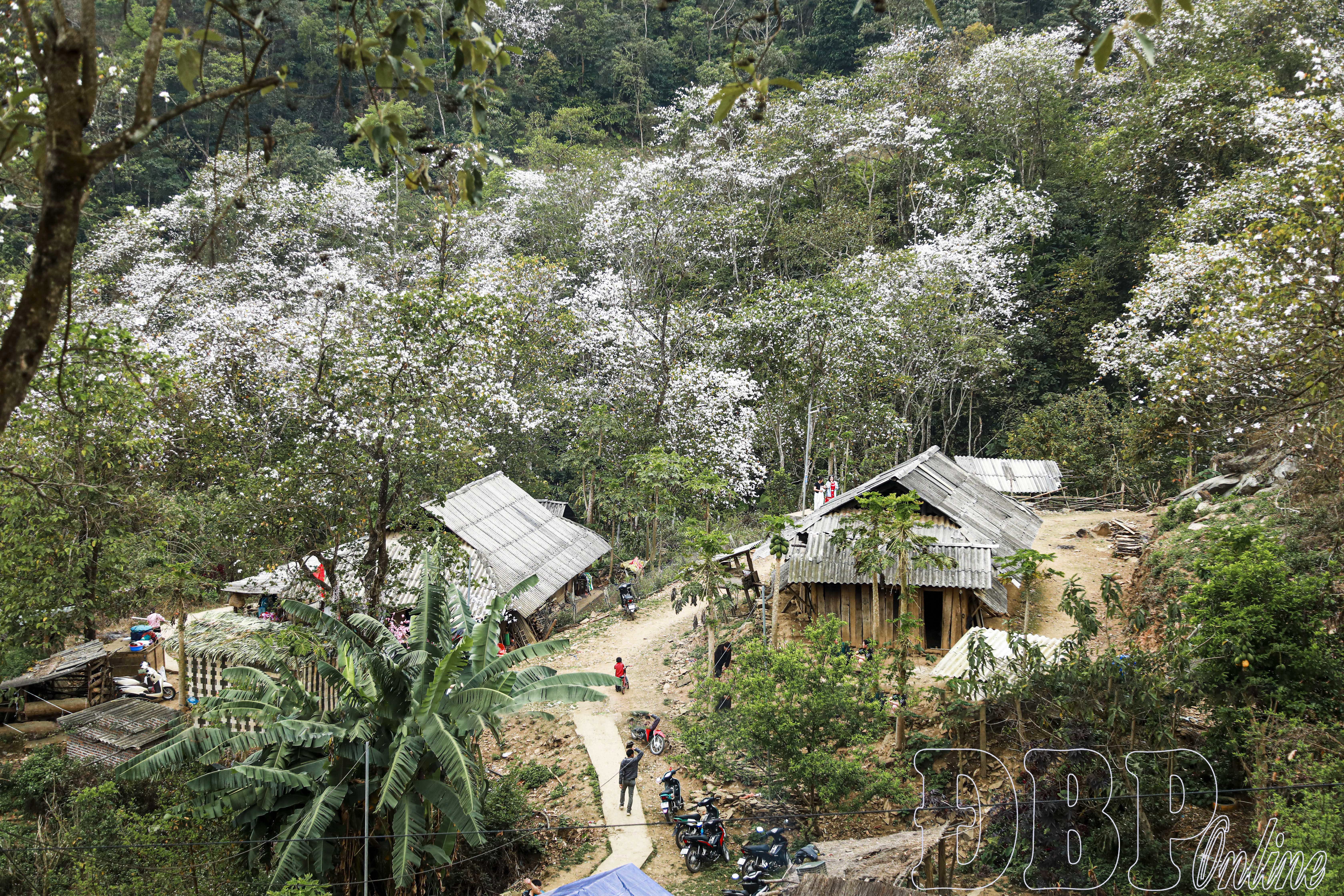
A pristine and poetic scene beside the low-roof houses of the Mong people.
In recent years, thanks to the attention of local authorities in preserving the landscape, promoting tourism development, and the spread of information through media channels, the Nam Cum ban forest has gradually become more widely known. The image of the white ban blossoms each March has spread widely, making Nam Cum one of the memorable stops for visitors exploring Dien Bien during the ban flower season.
Nam Cum Village has more than 70 households, all belonging to the Mong ethnic group. The local economy mainly depends on farming and livestock raising, so living conditions remain modest. As the village becomes better known to visitors from many places, residents are gradually taking advantage of the natural landscape to develop homestays and provide accommodation and dining services for visitors exploring the ban forest. The ancient ban forest has opened up a new direction for local economic development.
The first Na Tau Commune Cultural Festival in 2026 was held on March 7 - 8 in Nam Cum Village, associated with the preservation of the ancient ban trees. Within the framework of the festival, many lively activities took place, including the introduction of local products, cultural performances, folk games competitions and cultural exchanges. All cultural and sporting activities were held amidst the white ban blossoms, promising unforgettable impressions for both residents and visitors.

Stalls displaying and introducing local specialty products during the Na Tau Commune Cultural Festival in Nam Cum Village.
Amid the vast mountains, the ancient ban forest of Nam Cum faithfully blooms each March. Each delicate white petal drifting in the wind seems to invite visitors from near and far to come and immerse themselves in the pure, pristine and peaceful beauty of this highland village./.
Source: Dienbienphu Online

