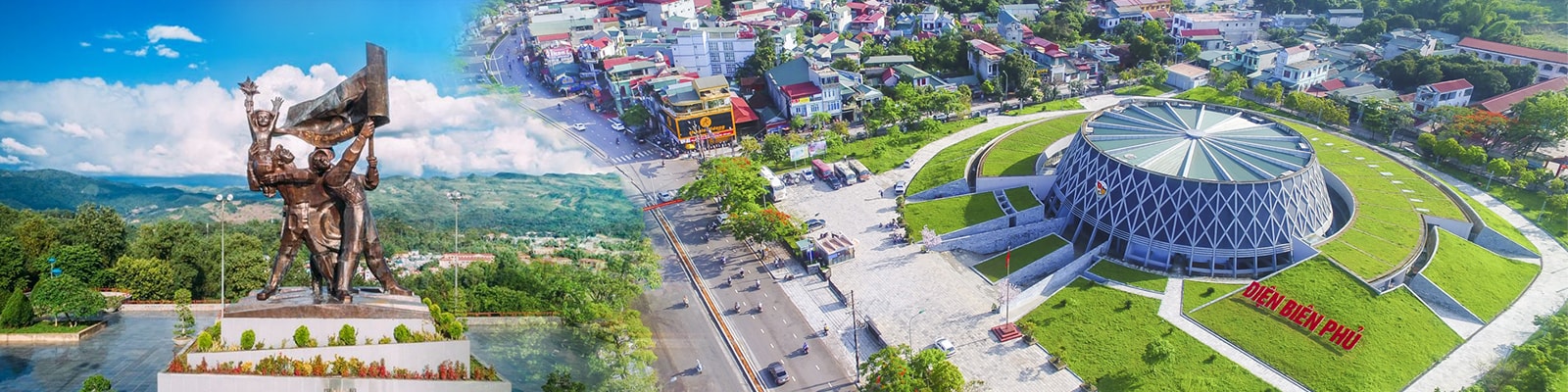
Discovering community - based tourism in Sin Thau commune
Dien Bien Province has identified tourism development as a spearhead economic sector and is implementing strategies to achieve this goal. In particular, tourism development is being promoted based on the cultural spaces of ethnic groups and distinctive ecological landscapes. In Sin Thau Commune, located at the tri-border area of Viet Nam, Laos and China and home to the Ha Nhi ethnic people local authorities and residents are gradually tapping into their potential and advantages to develop community-based tourism, attracting visitors to explore and experience the area.
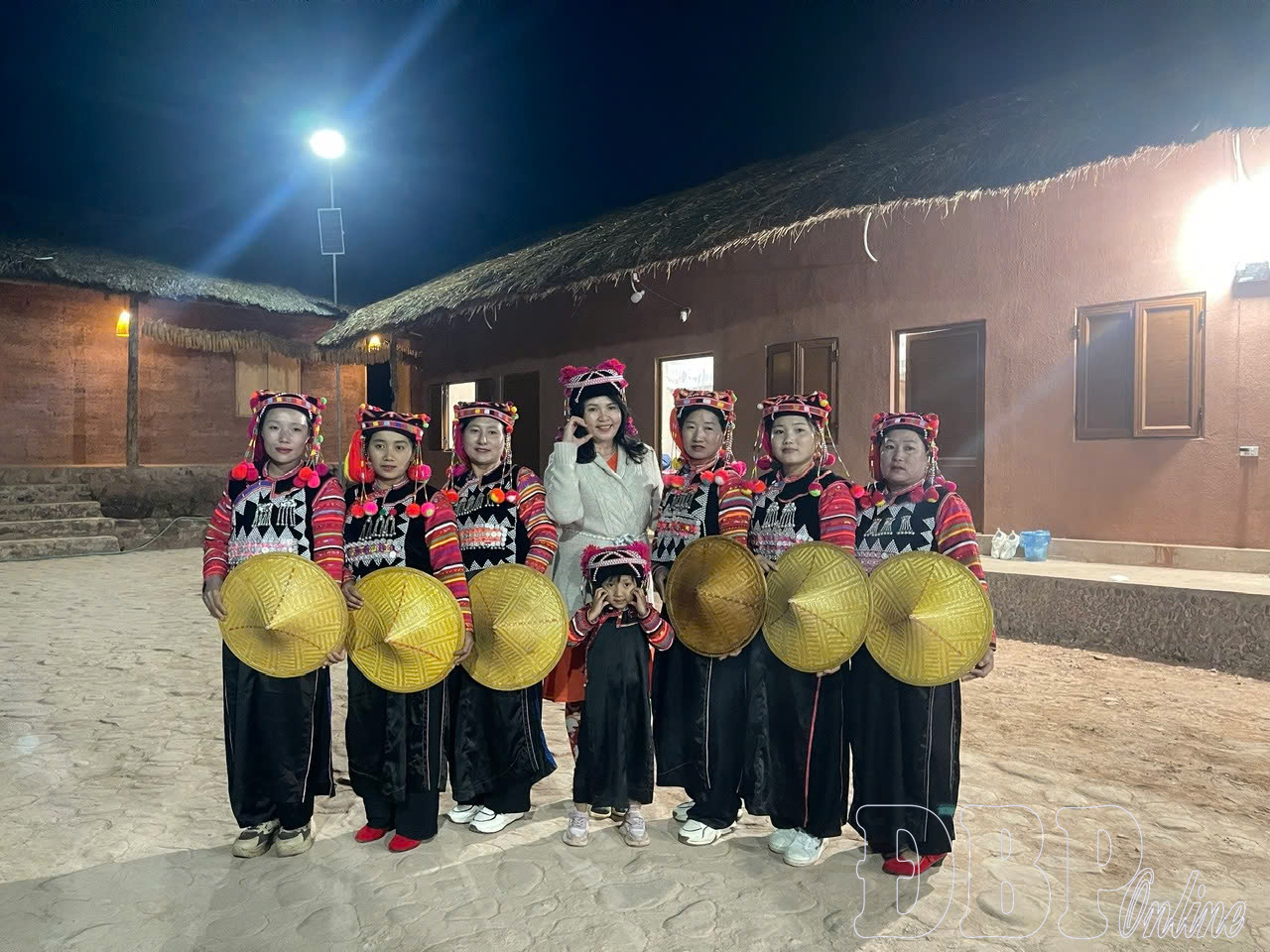
Visitors take souvenir photos with Ha Nhi ethnic people in front of a traditional rammed-earth house.
On Dien Bien’s tourism map, Sin Thau is considered one of the localities with favorable conditions for developing community-based tourism. First is its strategic location. Sin Thau is the only commune in the province situated at the tri-border intersection of Viet Nam, Laos and China, where Border Marker No. 0, the meeting point of the three countries’ borders, is located. Recently, the A Pa Chai Border Gate and the A Pa Chai Flagpole monument have gradually become new symbols at the westernmost point of the country, increasing the attraction for visitors who enjoy exploring border landscapes.
Along with its special location, Sin Thau possesses pristine natural resources, including a nature reserve, ranges of majestic mountains, waterfalls and streams. These factors provide important conditions for the locality to develop eco-tourism and trekking activities. The Party Committee of Sin Thau Commune has set the goal of effectively utilizing these potentials and advantages while gradually turning tourism into a sustainable livelihood for local residents.
Another advantage regarded as the most valuable asset for community-based tourism development in Sin Thau is its traditional cultural space. After the merger of the three communes of Sin Thau, Sen Thuong and Leng Su Sin, Sin Thau now covers an area of more than 51,000 hectares with 21 villages and over 6,000 residents. The expanded development space has also become more culturally diverse. Previously considered almost a “core area” of the Ha Nhi people, the population structure now includes various ethnic groups such as Mong, Thai and Kinh. This opens up opportunities for the locality to develop a more diverse and colorful community-based tourism model.
Among these, the living space of the Ha Nhi people with their rammed - earth houses, traditional festivals, dances, vibrant costumes and unique cuisine has been relatively well preserved.
Homestay spaces imbued with local identity create a distinctive attraction for community - based tourism in Sin Thau.
In recent years, several households in villages such as A Pa Chai, Ta Ko Khu and Ta Mieu have renovated their houses to accommodate visitors while organizing experiential activities such as visiting the A Pa Chai Flagpole, conquering Border Marker No. 0 and exploring traditional festivals. More importantly, local residents’ mindset has gradually changed. From purely agricultural production, many households have proactively sought opportunities to develop tourism-based livelihoods.
In A Pa Chai Village, Chu Khai Phu boldly renovated his family’s rammed-earth house into a homestay. Initially, it only had a few simple blankets and mattresses and offered basic local meals for visitors from afar. Gradually, the number of visitors increased. He shared: “In the past, we mainly relied on upland farming with unstable income. Now, by doing community tourism and welcoming visitors, we not only have additional income but can also introduce the culture of our ethnic group.”
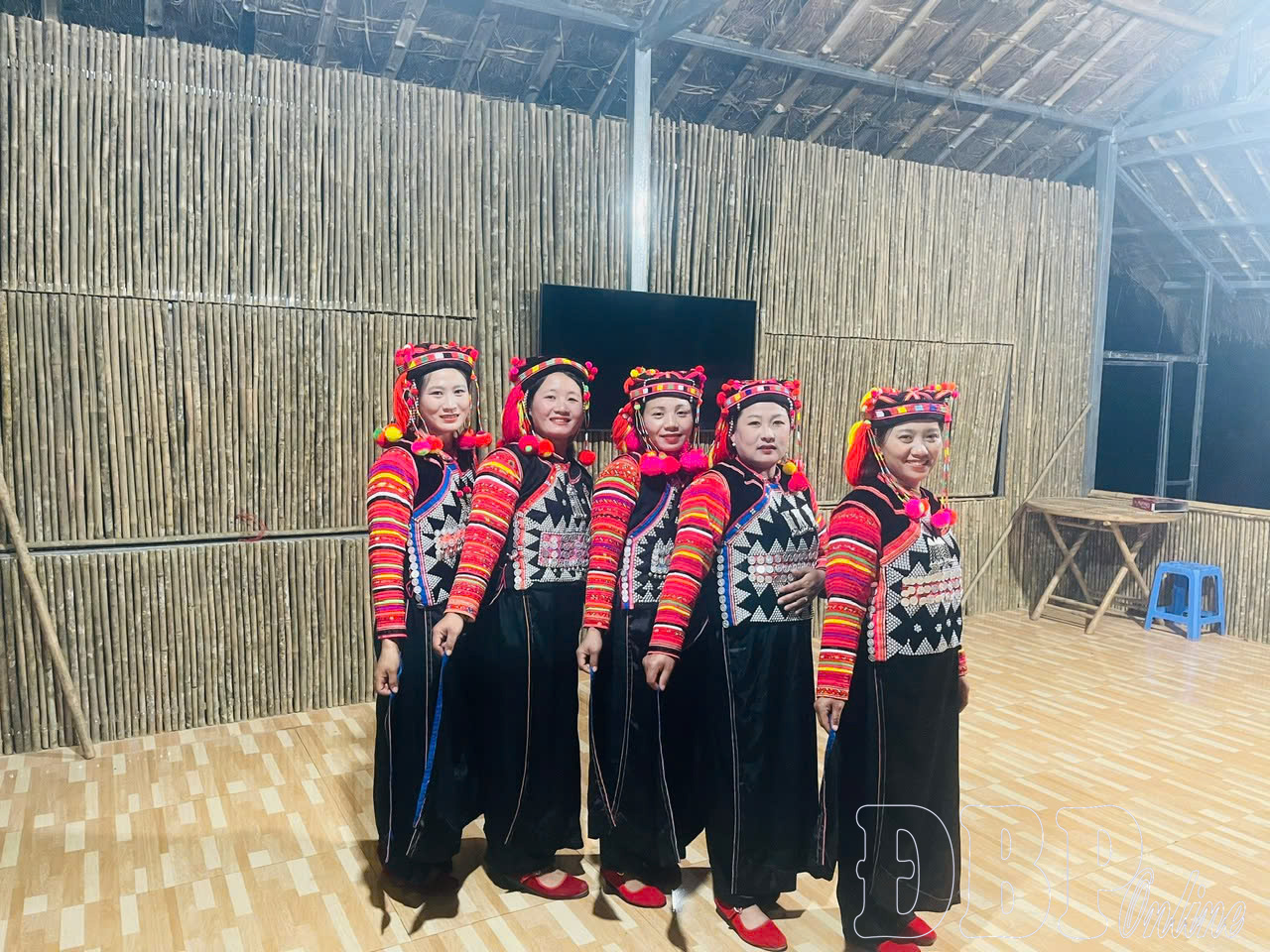
The beauty of Ha Nhi traditional costumes has become a highlight in the development of community-based tourism in Sin Thau.
In recent years, local authorities have played an important role in disseminating policies and mobilizing residents to change their mindset, while also supporting training in tourism skills to gradually form initial tourism models. Dang Thanh Huy, Secretary of the Party Committee and Chairman of the People’s Council of Sin Thau Commune, said:
“The commune identifies tourism development, particularly community-based tourism, as an important direction to effectively tap local potential and advantages. Accordingly, we focus on raising awareness and encouraging residents to gradually participate in tourism activities while preserving and promoting the cultural identities of ethnic groups and protecting the ecological landscape. Along with infrastructure investment and leveraging the advantages of the border gate and attractions such as Border Marker No. 0 and the A Pa Chai Flagpole, the locality is striving to gradually establish more homestays and community-based tourism sites to create sustainable livelihoods and improve people’s living standards.”
In Sin Thau, reputable figures in the community are becoming key contributors to preserving customs, transmitting cultural values and spreading the spirit of community tourism development among residents. Ly Xuyen Phu from A Pa Chai Village said:
“We encourage people in the village to preserve our customs, traditions and ethnic identity to develop tourism. At the same time, residents participate in training courses and learn from one another. Those with experience are willing to guide other households on how to welcome guests and provide services so that we can develop together and build the image of a friendly and culturally rich community tourism village.”
Although positive signs have emerged, community-based tourism in Sin Thau is still in its early stages and faces several challenges: limited infrastructure, unsynchronized services and the need to further improve tourism skills among local residents. However, as people’s mindset changes and cultural identity is properly revived, combined with the locality’s unique advantages and clear policy direction, the westernmost land of the country is standing before new opportunities for development.
On the journey of community tourism development, every resident of Sin Thau becomes a “tour guide,” telling the story of their village through everyday life and the cultural values preserved through generations./.
Source: Dienbienphu Online

