Pu Nhung commune develops fruit tree cultivation
In recent years, fruit trees in Pu Nhung Commune have gradually become key crops for poverty reduction and economic development. Pu Nhung is a highland commune with a large area and distinctive climate and soil conditions suitable for growing industrial crops and fruit trees. Taking advantage of these natural conditions to develop the local economy, residents have gradually shifted and restructured agricultural production from low-efficiency crops such as maize and cassava to fruit trees with higher economic value.
Maize fields that once dominated the area have now been replaced by fruit trees.
Previously, fruit trees were mainly grown for household consumption, while large-scale and commodity-oriented cultivation for economic development remained limited. With the attention and support of local Party committees and authorities in linking production with market outlets for agricultural products, the area devoted to fruit tree cultivation has continued to expand.
In Pu Nhung, the main crops include macadamia, coffee, pineapple, and mango. Of these, macadamia covers more than 1,000 hectares, coffee 705 hectares, pineapple 90 hectares, while mango and other fruit trees account for 244 hectares. These crops are well suited to the local climate and soil conditions and have brought clear economic benefits.
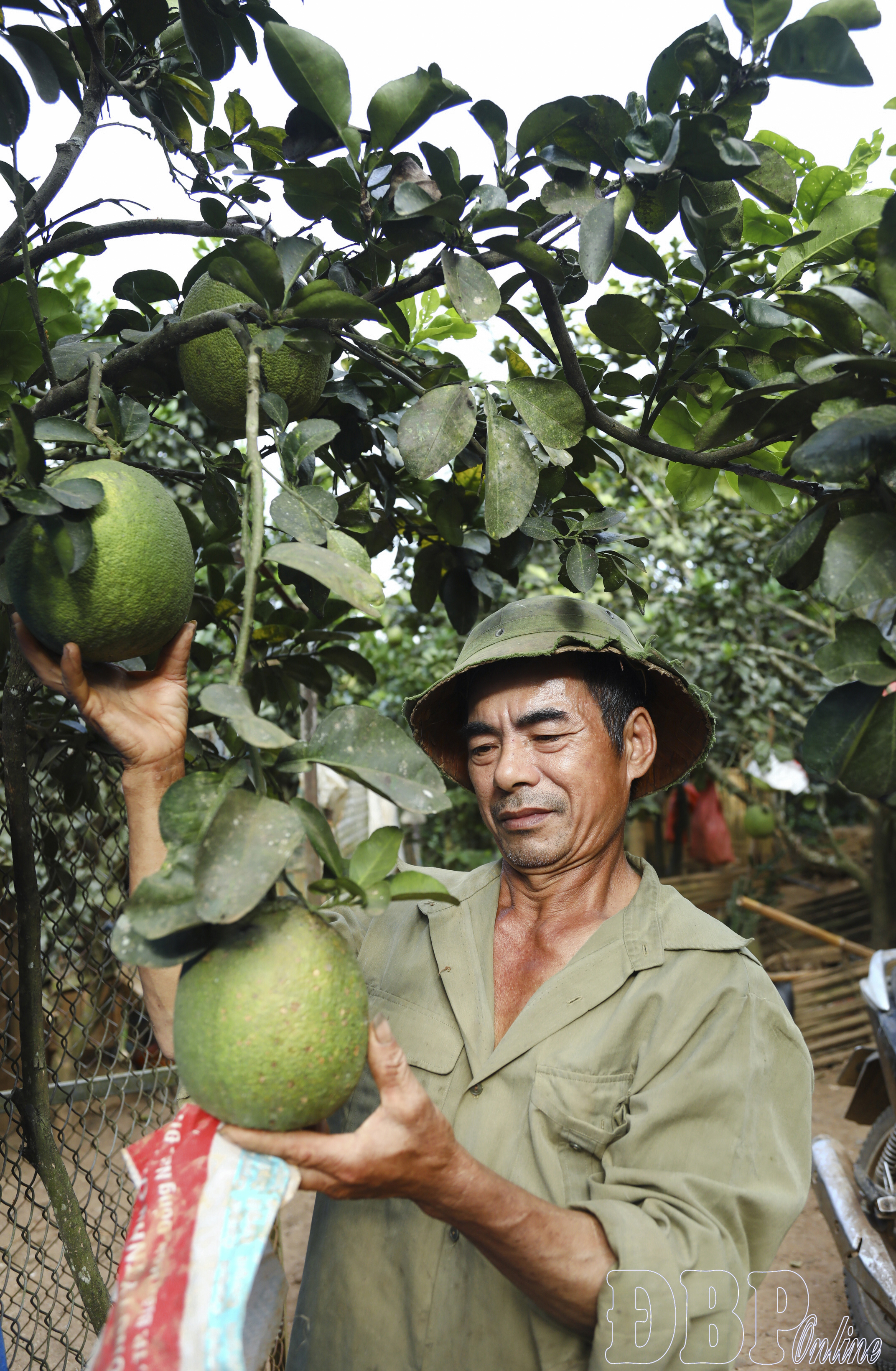
Residents of Rang Dong Hamlet take care of green-skinned pomelo trees.
Mr. Nguyen Van Bach, Chairman of the Pu Nhung Commune People’s Committee, said that in order to ensure the effective and sustainable development of agricultural crops, the commune’s Party committees and authorities have worked closely with enterprises such as Dong Giao Export Joint Stock Company (Doveco) to purchase, process, and guarantee market outlets for agricultural products. This cooperation helps avoid the common situation of “good harvest but low prices, high prices but poor harvests” for farmers.
The linkage has created a sustainable value chain from production to processing and consumption, minimizing risks and providing a reliable foundation for local people to expand production. At the same time, it helps expand concentrated production areas, apply scientific and technical advances, improve product quality, and meet the requirements of enterprises and the market.
According to Mr. Bach, shortly after the commune merger and the stabilization of its organizational structure, the First Congress of the Pu Nhung Commune Party Committee adopted a resolution emphasizing agricultural restructuring, focusing on converting low-efficiency crops into perennial agricultural and industrial crops. By the end of the term, the commune aims to develop more than 2,000 hectares of coffee and 1,700 hectares of macadamia. The locality also plans to gradually build product brands and develop concentrated, circular, and environmentally friendly production models, moving toward the goal of building a safe and sustainable new-style rural area. These are among the key breakthrough targets and tasks that local Party committees and authorities are determined to implement.
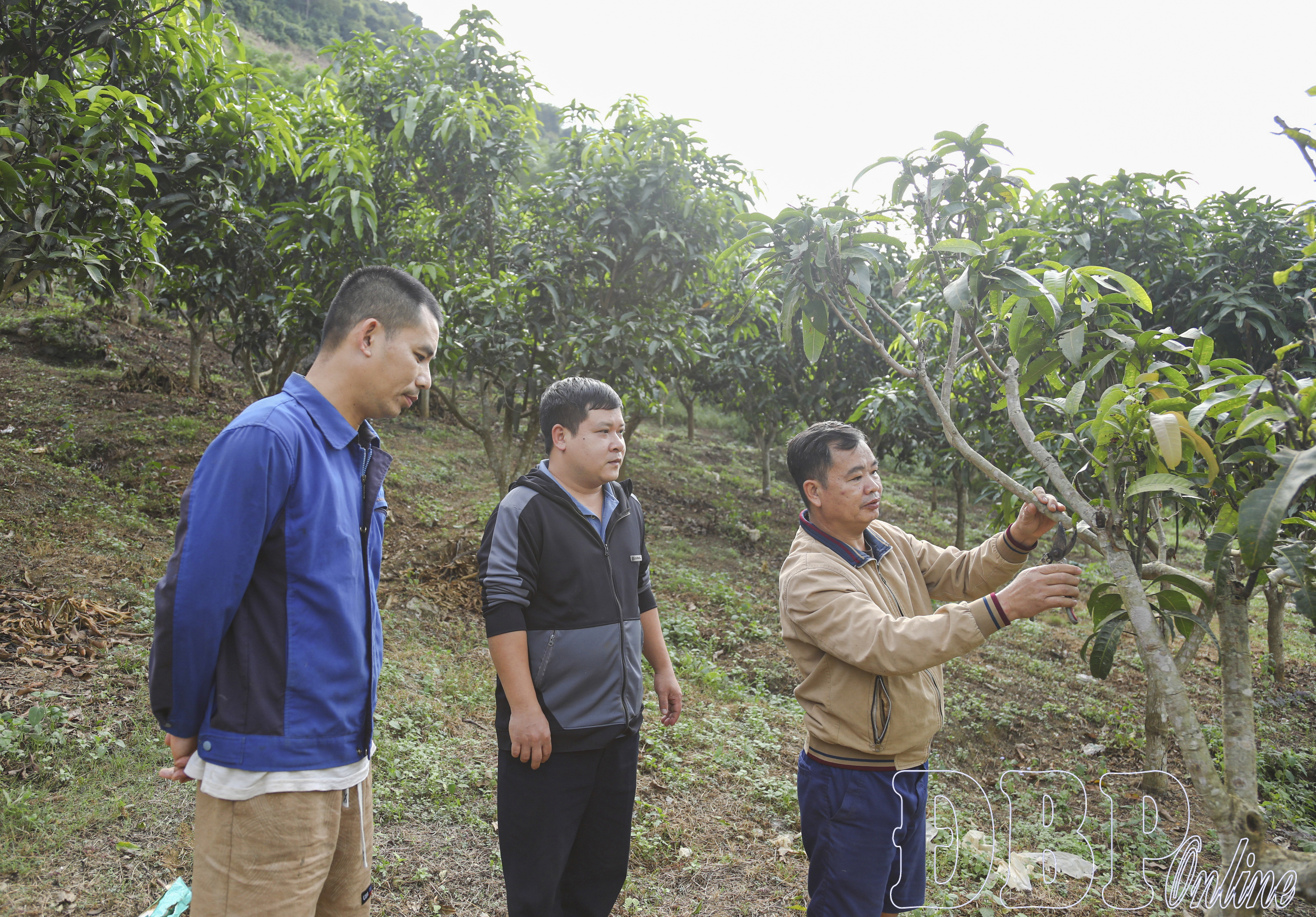
Commune officials visit farms and guide farmers on techniques for caring for fruit trees affected by pests and diseases.
Rang Dong Hamlet in Pu Nhung Commune has 98 households. Most cassava and maize fields previously cultivated by residents have gradually been replaced by perennial industrial crops and fruit trees.
Mr. Bui Huu Van, Head of Rang Dong Hamlet, shared that in the past people planted fruit trees only in small quantities because they were concerned about unstable markets and difficulties in selling their products. At present, once the crops are harvested, Doveco purchases them directly at the production site. In the past two years alone, the hamlet has planted an additional seven hectares of mango and pomelo. With stable prices and guaranteed market outlets, residents feel confident expanding production. His family has also converted one hectare of maize land to mango cultivation, which has begun yielding fruit this year. The economic return from mango cultivation is two to three times higher than that from maize because it requires fewer inputs and less labor, generating more than VND 30 million per hectare per crop.
Ms. Luong Thi Nhan from Nam Mu Hamlet shared that her family mainly grows mango and pomelo, which have now started to produce harvests. The family has nearly 1,000 fruit trees on about 1.5 hectares of land. This year, mango prices range from VND 10,000 to 15,000 per kilogram, while pomelo sells for VND 20,000 to 30,000 per fruit depending on quality. Before deducting costs, the family earns more than VND 50 million per crop. After the harvest, on former maize fields, the family continues to plant an additional 0.5 hectares of macadamia and coffee to further develop their economic activities.
With the active participation and support of local Party committees and authorities, together with the diligence and hard work of local residents, the development and expansion of fruit tree cultivation in Pu Nhung Commune continues to grow. This contributes to crop restructuring, environmental protection, diversified livelihoods, and stable, sustainable socio-economic development in this highland area./.
Source: Dienbienphu Online

